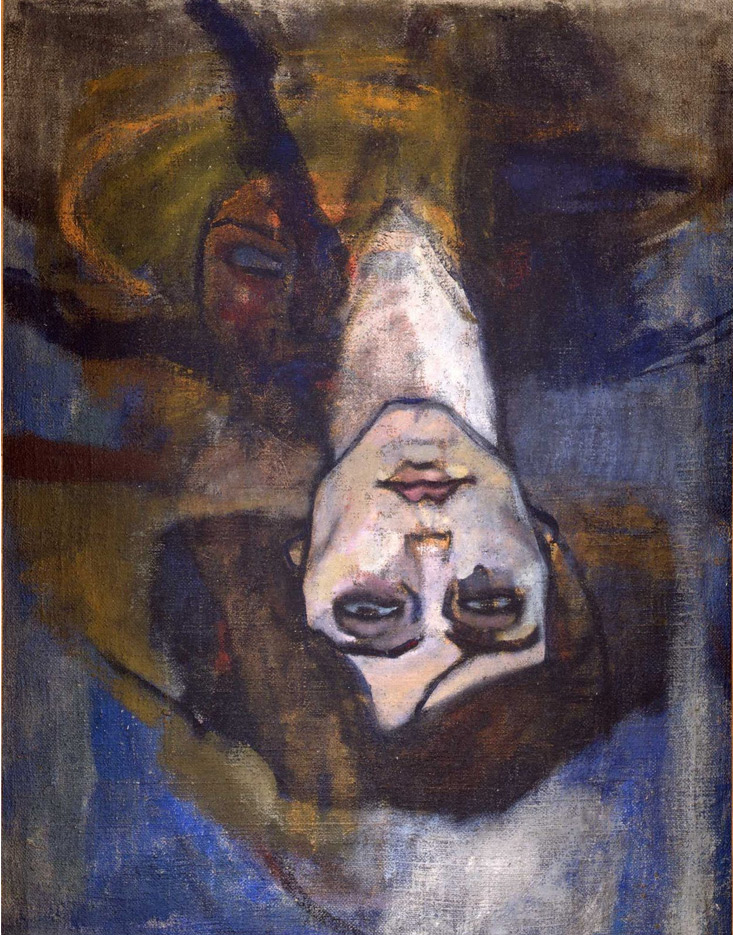
Maud Abrantes (on recto nude woman with hat)
Oil on canvas — 1907-1908-1909 ?
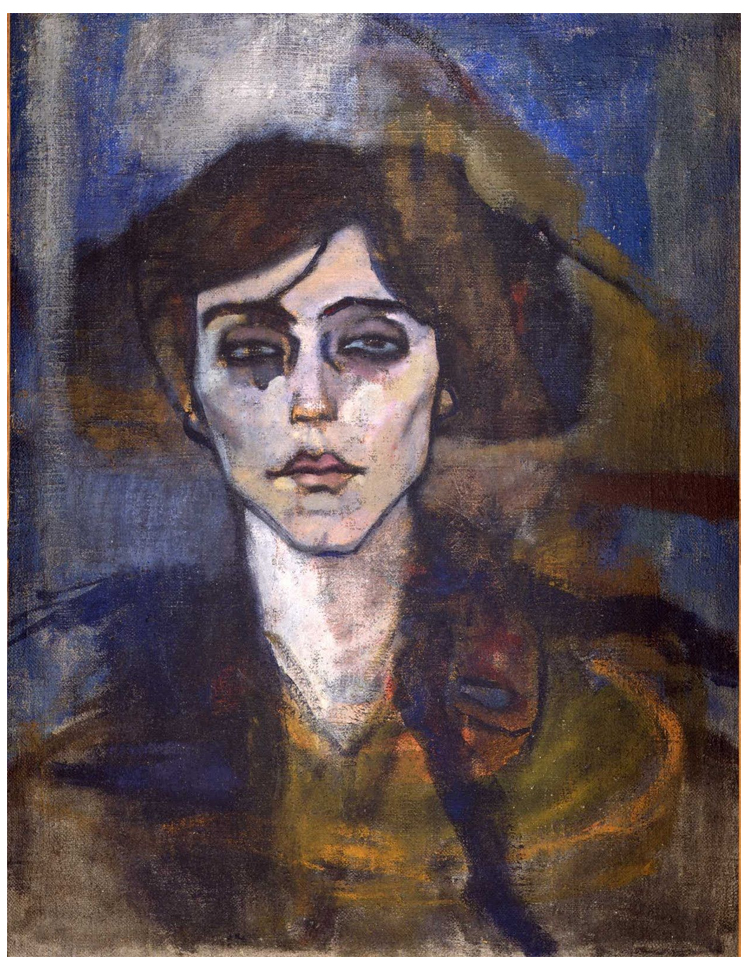
Identification
- Title
- English: Maud Abrantes (on recto nude woman with hat).
- Date
- 1907-1908-1909 ?
- Medium
- Oil on Canvas
- Dimensions
- 81.3 x 53.3 cm (Maud Abrantes area: 60 x 50 cm - Klein 81 x 54)
- Signature
- Unsigned - | Text: A JAN ABRAN MO/ MODIGLIANI
- Present location
- Hecht Museum, University of Haifa, Haifa, Israel (Cat. no. p-226a-b)
Catalogue numbers
| Compiler | Number |
|---|---|
| Arthur Pfannstiel | no. 6 (NO RECTO) |
| Joseph Lanthemann | no. 22 |
| Ambrogio Ceroni | no. 7B |
| Jeanne Modigliani | YES |
| Christian Parisot | 5/1908 |
| Osvaldo Patani | no. 12 B |
| Modigliani Project | ? |
| MR | YES |
| Modigliani Initiative/ AMDC | ? |
Legal note on MR: This investigation has not had access to MR’s catalogue raisonné; all research here is based on open sources, publications and exhibitions. By no means has that catalogue been copied at any point. Modigliani Project and Modigliani Research Project are marked YES when the work is published or otherwise recorded by those projects, even if no catalogue number is assigned; otherwise the field is marked ?.
Provenance
- Paul Alexandre collection, Paris.
- Reuben and Edith Hecht
- Acquired in London, September 1983
- Hecht Museum University of Haifa, Haifa, Israel (Cat. no. p-226a-b)
The sequence follows the published museum, sale, and catalogue record in this investigation. Gaps and uncertain transfers are marked as such.
Selected bibliography
Book-length publications are marked with a footnote giving a full citation. Exhibition catalogues appear in both this list and the exhibition list when this investigation recorded them in both places.
- Pfannstiel, "catalogue présumé" Modigliani. L'Art et la Vie. Preface de Louis Latourrettes, Seheur, Paris, 1929, p. 2 (Pfannstiel mentions only this side of the painting1
- Pfannstiel, Modigliani et son oeuvre, étude critique et catalogue raisonne, Bibliothèque des Arts, Paris, 1956- no. 6 (with no mention on the recto painting, just mention the Maud Abrantes portrait)2
- Ceroni, Amedeo Modigliani: Peintre; Suivi des Souvenirs de Lunia Czechowska, Edizioni del Milione, 1958- no.4 / 53
- Lanthemann, Modigliani, catalogue raisonné: sa vie, son oeuvre, son art, G. Condal, Barcelona, 1970 - no. 224
- Ceroni & Piccioni, Il dipinti di Modigliani, Rizzoli, Milano, 1970 - no. 7A / 7B5
- Mann, Modigliani, Thames & Hudson, 1980, pp. 40-416
- Castieau-Barrielle, Modigliani, Ed. AL Paris 19877
- Patani, Catalogo Generale, Leonardo ed. Milano 1991-94 - no. 12 B8
- Parisot, Catalogue Raisonné Modigliani Tome II, Graphis Arte, 1991 - no. 5/19089
- Alexandre, The Unknown Modigliani: Drawings from the Collection of Paul Alexandre, 1993, p. 54-56
- MR, L'Ange au visage grave, Musée du Luxembourg, Paris, 2002, p.106, 109, no. 3 verso10
- Klein, Modigliani: Beyond the Myth, The Jewish Museum, 2004-2005, p. 90, pl. 411
- Soto Caba, Modigliani, the timeless face, Libsa, 200712
- Klein, Modigliani Unmasked, The jewish Museum, New York, 201711
Exhibitions
- Cleveland, Ohio, Museum of Art, 1951
- New York, Museum of Modern Art, 1951
- Paris, Modigliani: l'Ange au visage grave, Musée du Luxembourg, 2002
- New York, Modigliani: Beyond the Myth, The Jewish Museum, 2004
- Toronto, Modigliani: Beyond the Myth, The Art Gallery of Ontario, 2004 - 2005
- Washington D.C., Modigliani: Beyond the Myth, The Phillips Collection, 2005
- Seoul, Amadeo Modigliani: Legend of Montparnasse, Hangaram Museum of Seoul Art Center, 2015
- New York, Modigliani unmasked, Jewish Museum, 2018
Notes
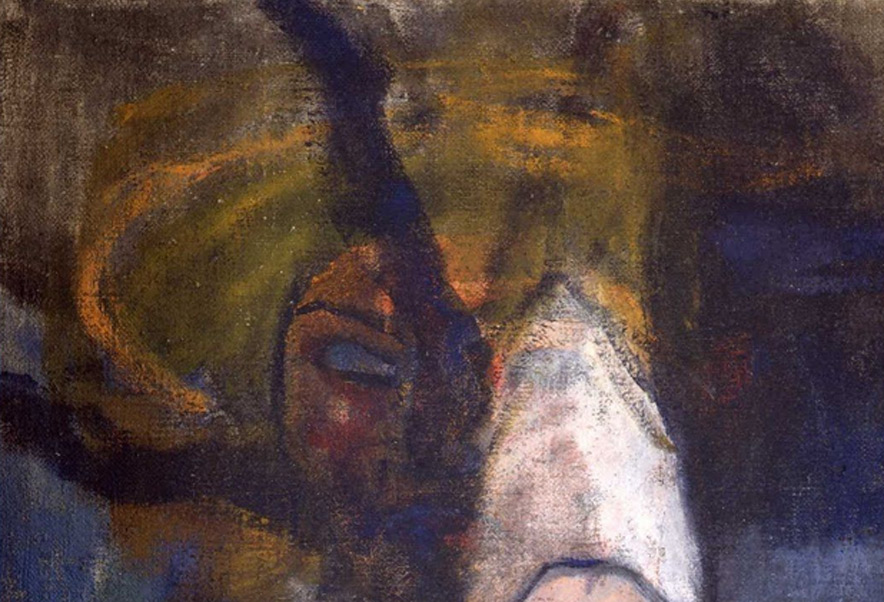
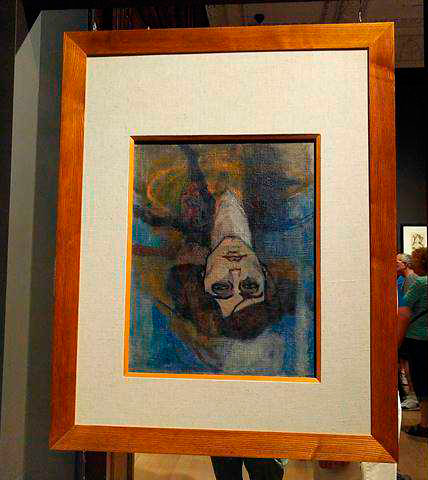
Hecht Museum, University of Haifa, confirms the reverse side of the same canvas (Cat. no. p-226a-b) as “Maud Abrantes”. Recent forensic imaging has documented multiple underdrawings and earlier portraits on the support.
Pfannstiel includes the Maud Abrantes portrait as no. 6 but the woman with hat is not included (probably a mistake or he never saw the painting live?
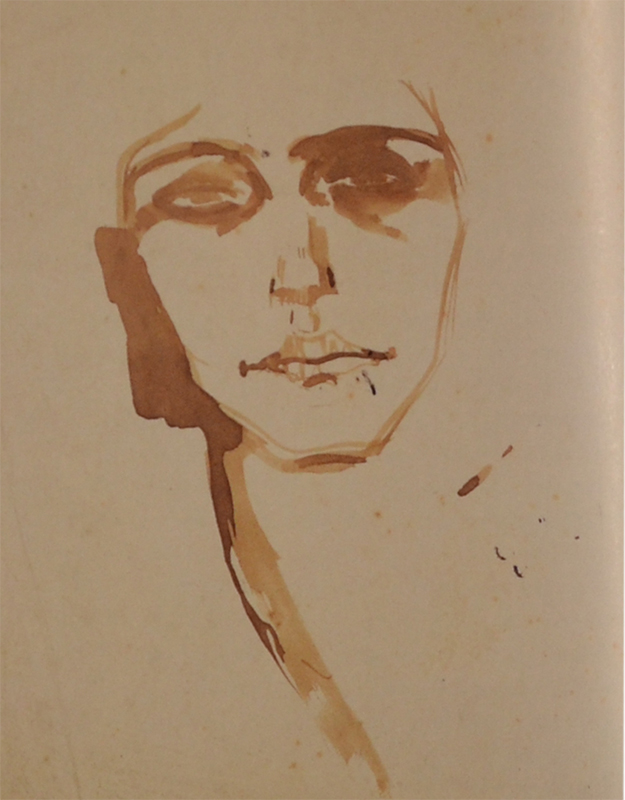
Alexandre collection haves a possible sketch for this work:
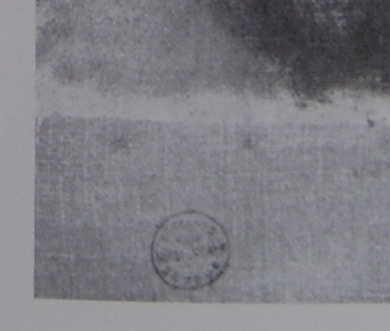
The painting just covers 4/5 of the size of the canvas on the lower side of the canvas that is not painted can be seen the export stamp from douane central paris. Stamp previous to the second World War (french stamps had another configuration during the occupation and after the war)
Where sources disagree, both readings are given. This is a working research page, not a catalogue raisonné.

Essay
Maud Abrantes (on Recto Nude Woman with Hat): Amedeo Modigliani’s Early Portrait on a Multi-Layered Canvas
Maud Abrantes (the verso of the double-sided canvas also bearing Nude with hat), an oil on canvas of approximately 81.3 × 53.3 cm (the portrait itself occupying roughly 60 × 50 cm), is dated 1907–1909 and is not signed in the conventional manner. An inscription reading “A JAN ABRAN MO / MODIGLIANI” appears on the surface. The work is catalogued by Arthur Pfannstiel (no. 6, recording only this side), Joseph Lanthemann (no. 22), Ambrogio Ceroni (no. 7B), Osvaldo Patani (no. 12B), Christian Parisot (5/1908), and the Modigliani Research Project. It is held in the Hecht Museum, University of Haifa (cat. no. p-226a-b). Provenance begins with the Paul Alexandre collection in Paris; the canvas was acquired in London in September 1983 by Reuben and Edith Hecht and entered the museum. The painting has been exhibited in Cleveland and New York in 1951, at the Musée du Luxembourg in 2002, and in the Modigliani: Beyond the Myth and Modigliani Unmasked tours of 2004–2005 and 2018.
The image presents a frontal bust of a woman whose head and shoulders fill the lower portion of the vertical format. The face is pale, modeled with cool blue-gray shadows around the eyes and warmer ochre tones in the hair and clothing. The eyes are dark and heavy-lidded, the mouth small and closed, the hair dark and loosely brushed. She wears a high-collared garment in muted greens and browns. The background is a deep blue with visible, directional strokes that leave the surface lively. The overall effect is more resolved than the recto nude, yet still exploratory in its handling of light and contour. The portrait is oriented in the opposite direction from the Nude with hat on the reverse, so that when one side is upright the other appears inverted.
Executed around 1908, the year of Modigliani’s first participation in the Salon des Indépendants, the painting belongs to the early Parisian phase under the patronage of Paul Alexandre. Maud Abrantes was a friend of the artist; a related drawing from the Alexandre collection has been identified as a possible preparatory sketch. Proportions remain relatively naturalistic, the neck is not yet elongated, and the features retain individual character. At the same time, the compressed bust format, the dark ground, and the concentration on the head already announce the artist’s lifelong focus on the isolated human face. The unfinished upper margin of the canvas preserves a pre-Second World War French export stamp from the Douane Centrale de Paris, confirming that the support left France before the wartime period.
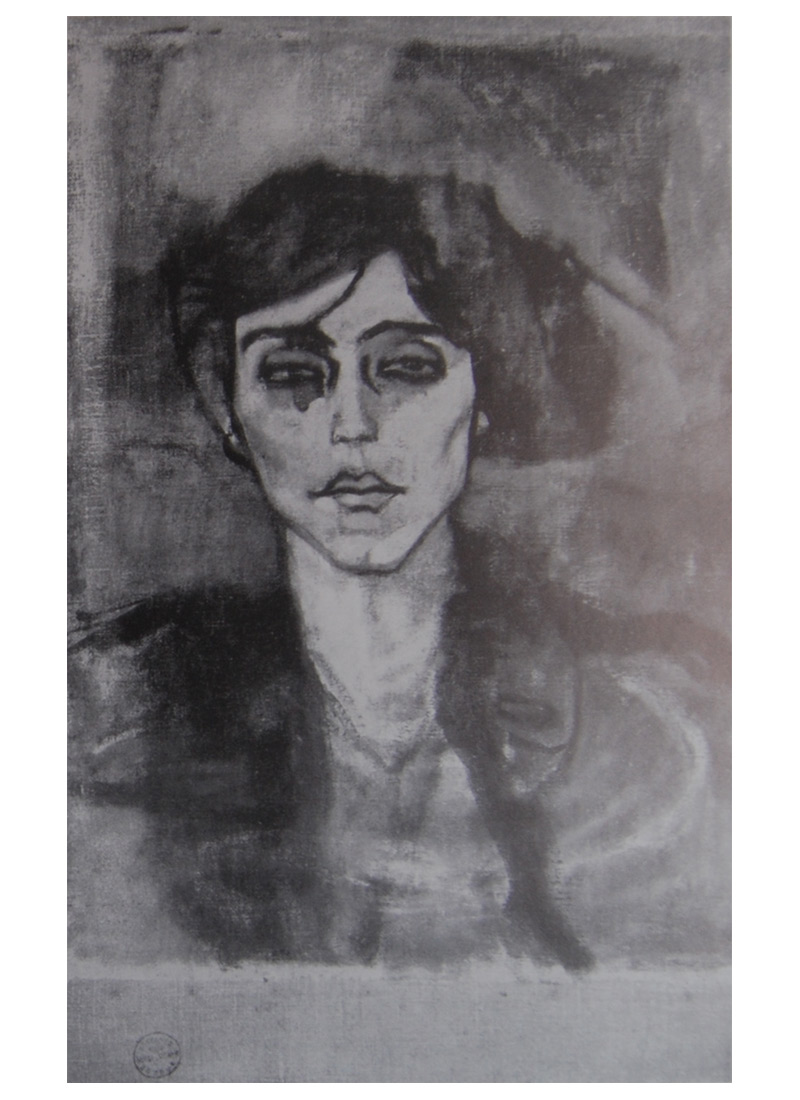
The canvas is a complex multi-layered support. In addition to the finished portrait of Abrantes and the recto nude, a partially visible figure had long been noted beneath the collar of the Abrantes portrait. Published detail photographs show this underlying face emerging through the thin paint. In 2022, X-ray examination undertaken for the Barnes Foundation exhibition Modigliani Up Close revealed further previously unknown sketches on both sides of the support: under the Abrantes portrait, additional partially finished faces; under the nude, a finished male portrait and an inverted female head. Museum staff have described the canvas as “a sketchbook on a canvas,” reflecting Modigliani’s economical reuse of materials in his first Parisian years. Whether all the underlying images are by his hand remains open, but the practice of covering and rotating earlier compositions is well documented in his early production.
In the larger arc of Modigliani’s career, the work stands as one of the most complete surviving records of his early working methods: rapid production, economical reuse of supports, and a growing confidence in the expressive power of the simplified head. Its double-sided structure, the visible underpainting, and the recently revealed underdrawings make it a unique document of the practical conditions under which the artist first developed the portrait and the bust as sustained subjects.
Notes
The secretmodigliani.com investigation page records the work as the verso of the same canvas as Nude with hat, oil on canvas, approximately 81.3 × 53.3 cm (portrait area ~60 × 50 cm), dated 1907–1909?, Hecht Museum, University of Haifa (cat. no. p-226a-b). It is listed in Pfannstiel no. 6 (verso only), Lanthemann no. 22, Ceroni no. 7B, Patani no. 12B, Parisot 5/1908, and the MR project. Provenance: Paul Alexandre collection, then Reuben and Edith Hecht (acquired London, September 1983). The page documents a possible preparatory sketch in the Alexandre collection, a pre-war French export stamp on the unpainted margin, and published photographs of the underlying figure visible beneath the Abrantes portrait. Independent reports (Associated Press, The Guardian, The Art Newspaper, July 2022) document the 2022 X-ray findings made in preparation for the Barnes Foundation exhibition Modigliani Up Close: additional sketches on both sides of the support. Catalogue consensus and museum records consistently identify the same double-sided work. The visual analysis is based on the published photographs of the Abrantes portrait, the ghost underpainting, the related sketch, and the two sides framed together.
Footnotes
- Arthur Pfannstiel, Modigliani. L’Art et la Vie, preface by Louis Latourette, Paris, Seheur, 1929 (presumed catalogue).
- Arthur Pfannstiel, Modigliani et son œuvre, étude critique et catalogue raisonné, Paris, Bibliothèque des Arts, 1956.
- Ambrogio Ceroni, Amedeo Modigliani: Peintre; suivi des souvenirs de Lunia Czechowska, Milan, Edizioni del Milione, 1958.
- Joseph Lanthemann, Modigliani, catalogue raisonné: sa vie, son œuvre, son art, Barcelona, G. Condal, 1970.
- Ambrogio Ceroni and Leone Piccioni, I dipinti di Modigliani, Milan, Rizzoli, 1970.
- Carol Mann, Modigliani, London, Thames and Hudson, 1980.
- Thérèse Castieau-Barrielle, La vie et l’œuvre de Amedeo Modigliani, Paris, ACR, 1987.
- Osvaldo Patani, Amedeo Modigliani: catalogo generale, Milan, Leonardo, 1991–94.
- Christian Parisot, Catalogue raisonné Modigliani, Livorno, Graphis Arte, 1991.
- MR (cited here as MR), Modigliani: l’ange au visage grave, Paris, Musée du Luxembourg, 2002. Cited from the published exhibition catalogue only.
- Mason Klein, Modigliani: Beyond the Myth, New York, The Jewish Museum / Yale University Press, 2004.
- Victoria Soto Caba, Modigliani: The Timeless Face, Madrid, Libsa, 2007.